7 July 1982, 19:36 PM
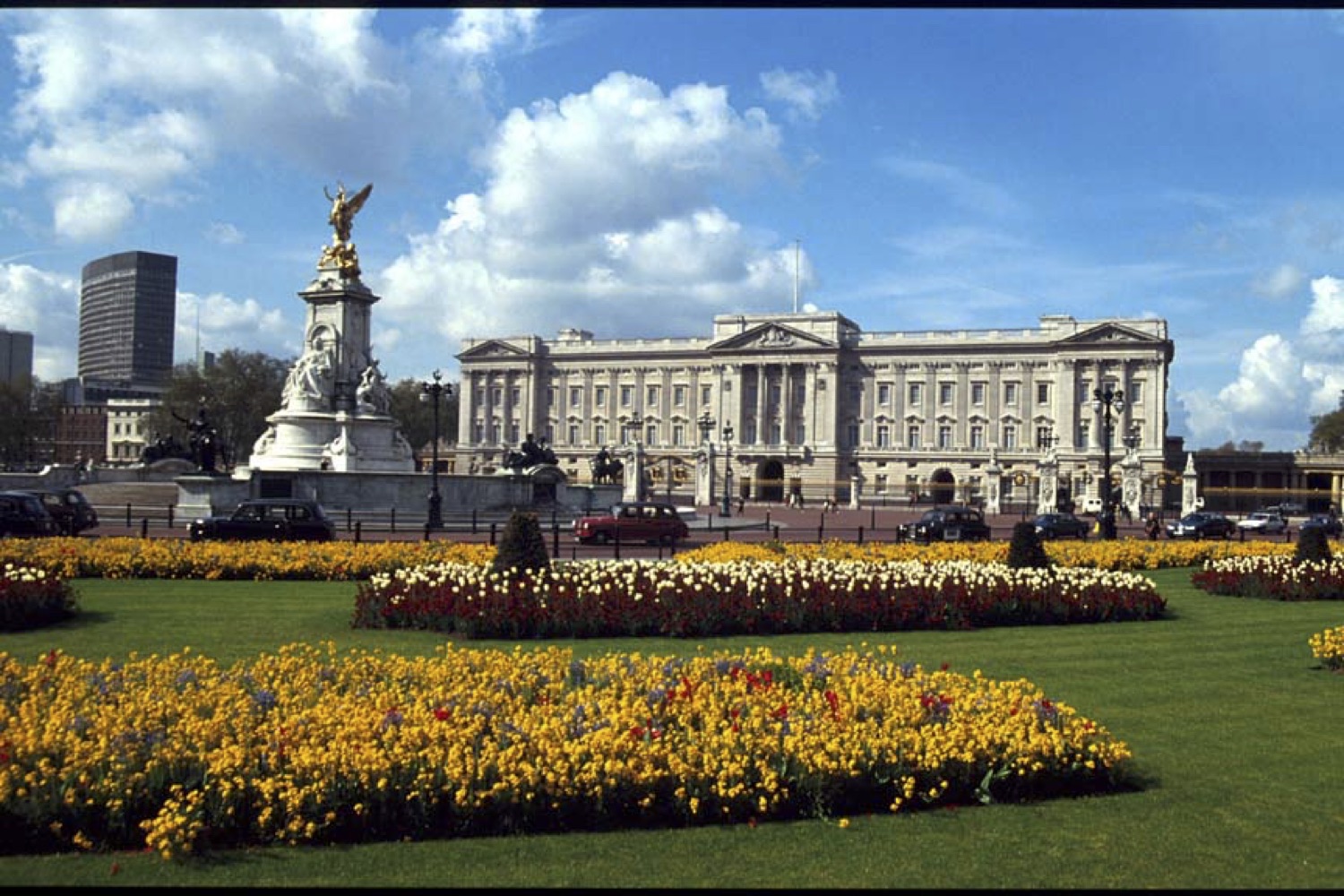
I take a swig from the flask in my hand—it’s scotch, a Glen Orchy, and the liquid roughly scorches my throat as it slides down, almost like swallowing the embers left behind a bonfire’s raging flames—as I lounge against the steps of the Victoria Memorial. Despite the edges of my vision seeming muddied, which makes the whole Mall appear like a watercolour painting, I can’t help notice all the people mocking our Queen. If not for the Royal Standard flying over Buckingham Palace, these folks wouldn’t even know that she was currently sharing the same three kilometres of space as the rest of us. When they aren’t trying to annoy the guards at the entrance, there are the usual tourists quickly taking pictures on their cameras. And there are men and women—most likely Londoners—clad in their Yuppie get-ups walking to and fro past the crowds of sightseers, wholly ignoring the presence of the flag. Yet it was only a month ago, when an official royal proclamation sat outside the palace gates, they shed an ounce of compassion for Prince Charles and Princess Diana when the birth of their first son was announced. The entire Mall was chockoblock with reporters and well-wishers and those just dying to get on the telly. I swear these Thatcherites march on to the rhythm of their own societal disdain. They acknowledge their emotions similar to how they acknowledge everything else: privatising them away for the privileged to judge and enjoy.
Well before Christine left me and abandoned our children, she used to tease me for being a Monarchist. “They’re a drain on our taxes,” she used to tell me. “They will never know you exist, Michael, protecting themselves like they do in their castles while we starve.” But she knows I exist. She has to. I’ve addressed forty-seven letters exactly to the Queen and if the rumours are true, she’s read all of them. My correspondence began with my invitation to Christine and I’s wedding, to which we received an official congratulatory certificate from the palace. I even wrote a letter for each of my kid’s births, so, four in total. My latest letter, the one I dropped off at the post this morning, detailed the crumbling state of my marriage. I’m hoping I can get some advice from the woman who’s been married for almost forty years. And this time, I want more than some document expressing empty condolences with the typical stamp near her signature.
It’s so regal—Buckingham Palace—and so boring, too. What it lacks in towering spires and soaring belfries, it makes up with sixty-eight windows looking out on this tiny corner of the city; there are seven hundred and sixty windows to be specific and they are cleaned once a month. Unfortunately, they’re swallowed by the characteristic grey walls that surround them. Because of the dreary hue of the palace, the top of it almost blends in with the muted silver, dusty sky overhead. But the wrought iron gates, this prestigious barrier that is garnished by actual gold, is where the real beauty of this landmark lies. Positioned symmetrically on both sides of the front gate, the Royal Crest announces the prevalence of the people living inside by the delicately carved lions and unicorns wreathed in gold laurels. And flanking this masterpiece sit two stone columns, each emblazoned with two angels holding up a singular crown. Adorning these pillars, lampposts ascend over the gate.
These are the details regularly dismissed by newcomers because they’re so naively eager to capture a picture of any movement occurring behind the curtains of the windows above. But I notice the details.
“The children need their mother,” I plead to the imposing edifice, but my words are frozen by flashes meant for posing travellers and lost on the coattails within the street traffic. Glancing towards my watch, I realize I’m going to be late if I don’t leave now. I made plans to meet Tommy and Big Dave at the Bag O’Nails on Buckingham Palace Road, which is only a ten-minute walk from here, and seven minutes if I walk fast. Depositing the flask in my bag before zipping it back up, I grip the wall for support as I stand up. I’m absolutely guttered, and on the steps of the palace no less. A cigarette usually steadies my swaying drunkenness, so I take the last Sterling from the pack in my pocket and find my lighter, too. Click, light, burn, inhale, and the numbness subsides enough for me to place one foot in front of the other.
.
As I enter the pub, the scene inside greets me like a sixth pint of Guinness being set properly on the bar top for me. Throughout the place, the bare, brown tables and chairs scatter themselves haphazardly vying for any available space they can fit. On the farthest wall, a group of twentysomethings are accosting the only two dartboards here, which is probably a good thing—last time I played, I nearly missed Tommy’s head when he was going to the loo that’s just down the hallway. Attached to the beamed ceiling, lanterns hang themselves, offering their signature soft lighting. Pinned all over the walls are banners and jerseys of the Chelsea Football Club; the Lilywhites never frequent the Bag O’Nails because us Blues already claimed it. While it’s not our local pub, it’s the closest one to everyone else’s job. I recently got sacked from my own, so I go where they tell me.
Before I walk over to my friends in the corner, I wave to Sal behind the counter. He knows my usual. “You alright?” Big Dave asks as I come up and take my standard seat next to Tommy. On the table, there are already two empty pint glasses with two more half full in their hands.
“Carlsberg?” I gesture to their drinks. Usually, we’ll all buy each other a round of Guinness and suffer through Big Dave’s rants on why it’s the superior beer and how it’s unmatched. I met Big Dave here when England won the World Cup—I was eighteen and had just left home because I was finally old enough to ditch my father’s violent tirades. Newly graduated and utterly sloshed, Big Dave introduced himself with his namesake along with a drink. Him and Tommy have been friends since they met each other at uni as freshers when they were assigned to live in the same residence hall. And unlike me, both of them have steady jobs. Tommy teaches at a primary school and Big Dave works as an accountant for Stemcor, a steel company.
“We’re warming ourselves up, mate.” He replies. “I’d say you should get yourself a drink, but it looks like you’ve already started, too.” Almost squealing as he takes another gulp, I spot the familiar, too-large front teeth escaping from his lips. Quickly wiping his mouth, he says, “You look like shit, Fagan.”
“Bugger off,” I retort as Sal puts a pint of Guinness in front of me and walks away. I choke down a mouthful of beer and relish the chalky, chocolate flavour.
“Take it easy on him.” Tommy interjects, miffed. Where Big Dave is blunt and abrasive, Tommy is a well-mannered chap. Clinking his glass against mine, he continues, “How have you been?”
Deciding not to share about my drunken day on the steps of Buckingham Palace, I shrug, “I’m bollocks. . .Christine still didn’t come home last night.” I take another swig. “Her folks were barking mad when I called to see if she was staying with them.”
“Was she?”
“No, which means she is either staying with her sister or with that Peter bloke.” A few weeks ago, I accused Christine of cheating on me with her co-worker. She was always ‘working late’ with him and always, always telling me how funny he was when she came home. From my interrogation, a fight ensued in which she demanded to know when I’d stop being a ‘half-assed bum loafing on the couch all day,’ as she so eloquently put it. I slurp the last of the Guinness down. “Oi! Sal! Can I get another one?” I yell across the pub. I should’ve just ordered two when I came in. Turning back to Tommy and Big Dave, I say, “And I’ll bet you both a hundred quid that she’s sucking off that tosser right now.”
“How are the kids doing?” Tommy inquires.
“They don’t know what to think, but Christopher may have some idea on what’s going on, though.” He’s my oldest son and he asked me the other day if his mother would be coming back home—every night, he’s been helping me put Gavin, Claire, and little Susie to bed, and making sure they eat a proper meal while I search for a new job. No twelve-year-old should have to do this.
When Sal comes by with my second drink, Big Dave interrupts and says to him, “We’re going to need three more of those.”
“Are you warmed up enough, yet?” I ask.
“No, mate, those are just for you.” He raises his beer to me before finishing it off. Pushing out from the table, he continues, “I’m going to use the toilet, and when I come back, can we please stop talking about this cunt, eh?” Before I can even defend Christine or explain why she in fact is not a cunt, Big Dave is already heading down the hallway towards the loo.
“He’s a right foul git, you know that,” Tommy offers. Carrying a tray this time, Sal deposits three pints of Guinness on the table.
Taking one of them, I reply, “He’s always thought she was a twat.”
8 July 1982, 02:18 AM
After we finish Big Dave’s seventh round and our stomachs feel a bit heavier than before we started drinking the obscene amount of beer, we exchange our drunken farewells. While both of them need to walk to Victoria Station to take the Hammersmith line all the way to Moorgate, I choose to walk home. Tommy offers to pay for a taxi, and after I refuse, he insists on paying my Tube fare, but I turn it down as well. Besides being the cheapest route, walking doesn’t stress me out as much as the Tube does and nowadays, taxi rides can range from five to seven pounds for just needing to be dropped off a mile further. Plus, there’s a particular kind of illusion that consumes London when the tourists retreat to their hotels and when the locals stumble home from their own adventures in debauchery. It’s a certain kind of quiet not usually acknowledged in this city.
I’m walking along Buckingham Palace Road. To my right, an array of different shops and restaurants collide against each other—their windows are dark and the buildings are vacant, which is no surprise as it is just past midnight. Within every other square of concrete, a tiny tree sprouts up. Across the road, I can barely make out the top of the Victoria Memorial. Occasionally, a car or a bus roars by, briefly illuminating me with their headlights. Crossing the street and making sure that the road is clear, I dash over to the pavement adjoining the palace walls. If I take this route all the way towards the Mall, I’ll come to the front of Buckingham Palace.
This is my favourite part of walking at night because no one else should be at the gates.
I look up past the walls, greedy to catch a glimpse of the palace for the hopeful chance that a light might be on in one of the windows. But there are no lights on. Instead, I spot a window that’s open—not all the way, but just slightly ajar. The windows are never left open. That’s not good. Someone should close that. I stop walking and observe the palace. It looks like the window is on the first floor. Where are the guards? Why haven’t they closed it yet? Anyone could easily scale this wall, climb the drainpipe up to that window, and do God knows what in there. Someone needs to close it.
And that person will be me. I’m just going to shut the window from the outside and run back before anyone catches me.
Surveying the wall in front of me, I look for the easiest place to climb it. It doesn’t look like much of a feat since it’s only a few feet taller than me. Taking a few steps back, and making sure there are no drivers coming this way, I sprint at the wall and jump with my hands and fingers spread out. I barely have a hold on the top of it, but using my feet to propel myself up from the wall, I manage to ungracefully fling myself over it. Thankfully, there is grass on the other side of the wall. I expect to hear screams or to immediately be apprehended by the palace guards following my fall to the ground, but neither happen. Quietly pushing myself up, I step behind a tree and peer around it. There is no one else out here besides me and I can see the open window is only a couple yards away. I’ll just shut the window and climb back over the wall. I’ll just shut the window and climb back over the wall.
Rushing towards the palace, my feet make divots in the lush grass. Never in my life have I run this fast, and when I reach the base of the building, I’m surprised I have not been peppered by bullets, yet. The stone of the railing frictions against my hands as I leap over it. I keep close to the wall, hiding within the crevices of it, weary because if I’d tripped a sensor, then surely the bobbies would’ve surrounded me by now. As I retreat farther and farther into the shadows, my back lightly clangs against the drainpipe. I know I don’t weigh enough to tear it down, so I shimmy up to the gutter and lightly land on the balcony outside the open window. Cautiously approaching it, I pull the window shut. But as I turn away, I hear its slow creak as it opens again. Applying just a little more force to close it, but not to be heard, I seal the window. And it opens again. Maybe I need to go inside, close it, and hopefully, the palace staff won’t make too much of a fuss of this.
This time when I go to the window, I gently tease it open and nudge through the frame. I find myself in a small, dark room that is sparse. Before I leave the room, I shut the window and clasp the lock from the inside, and it stays locked in place. The door is at the opposite end of the room, so I grasp the doorknob, turn it, and peep through the crack. After seeing and hearing no one near the door, I pull it open a little bit more and sneak out.
I have never actually been inside Buckingham Palace before, and I’m awed by the extravagance of the interior decoration, and how it contradicts the squared bleakness of the outside. There are chandeliers overflowing with crystals, there are magnificent golden statues of men and women, mosaics of common folk as Titans and Olympians. There are churning carpets, beautiful tapestries absorbing walls as big as tennis courts. The floors are swollen with lavish, woollen carpets. I am shocked at the general emptiness of the place: there are no people milling about, there are no servants and guards marching for the wills of the Royal Family, and there are no princes or princesses lounging about. I always thought this place would have a greater sense of urgency about it, a sense of importance to explain the action. But the power of this establishment seems dormant. Still, I can’t believe I am really inside Buckingham Palace right now. I briefly entertain the idea of finding the Queen and telling her about my letter.
Suddenly from down the hallway, I can hear a vacuum starting up and it sounds really close. Shit. I run the opposite way and after passing a couple doors, I open the closest one and rush in. When I close the door, I am not quite sure where I am. The cracks in the drapes allow very little light, but I can see a four-poster bed over there in the corner, so I’m assuming this is one of the suites available for guests of the Queen. Not too shabby of a place to hide out in for a bit because that maid will surely be vacuuming the hallway for a while. Tiptoeing to one of the windows, and ignoring the subsequent creak of the floorboards under my feet, I dare to peek my head through the sliver between the drapes. Directly under me, I can see the driveway that extends past the front gates of the palace. There are a lot of cars out there parked in mismatched formations. And surrounding the whole thing, there are windows upon windows looking out on the quadrangle, quietly surveying this private, untouched part of the world. I barely hold in my gasp of delight.
Noticing a curtain tassel to my right, I give it a light tug before quickly drawing them open completely. The room is completely flooded with moonlight and I look around. Besides the four-poster—which is very ornate considering the gilded bedframe and delicately carved bedposts—there are Chippendale chairs strewn about the place. Right next to me, there is a dining table with six chairs pushed in and a bouquet of flowers sitting on top of it. It’s kind of weird to see that here, but I guess if I were familiar with the customs of royalty it would make more sense to not eat in the dining room. An inviting umber ottoman rests against the bed. In the centre of the room, there are two settees facing a chesterfield sofa. And all around the room, there are picture frames sitting on top of more picture frames, and it’s almost unsettling, but I’m pretty sure every member of the Royal Family is staring back at me from them. Perhaps they are a reminder to the guests to know just who they are dealing with—still, I slowly nudge the glare of the Queen Mother’s gaze away from me.
There is a rustle and I unfortunately see what I had not spotted before opening the curtains. Within the bed, I can see her looking at me. And I don’t mean to be crass, but if you ask me, the Queen’s bedhead is quite ghastly when she wakes up. While her mouth is set with her permanent, signature note of emotional neutrality, her eyebrows shoot up into her hairline and she grips her blankets closer to her chin. It’s never an expression I would ordinarily expect from Queen Elizabeth II. Oh no. I delicately take a step toward her when she demands, “What are you doing in here?! Who are you?!”
“Don’t move! Please,” I stammer. I catch sight of my reflection in the vanity that is to the left of the bed and see what she must be seeing. My hair is dishevelled and my collar is undone. Are there really three stains on my shirt right now? Shuffling my feet, I give her the most pleading look I can muster. She either thinks I’m a complete nutter or really pathetic.
She relaxes barely a millimetre into her pillow. “Are you with the IRA?” Even now, when she must be fearing for her life, her voice still holds the ring of a spoon being placed on a saucer before morning tea.
“What? No! No, never! I just wanted someone to listen. . .to talk to.” I tell her. “And I thought, well maybe. . .she’ll listen to me.” I take a breath, and it is kind of hard considering the company I’m with. But I suppose she needs to know the truth before she brings the entire Scotland Yard down upon me. “This isn’t part of some big plan, I promise you. I haven’t been spying on you or anything. I was just walking past and saw how easy it was to get up the wall. It was really a spur of the moment thing.” Clasping her fingers together, the Queen raises an eyebrow. “I just wanted someone to talk to, and I thought, well. . .you might listen.”
I did not know what I was going to say to her before it erupted from my mouth, but never would I have thought that Her Majesty, the Queen would respond to me, “Listening is part of my job.”
In this moment, I realize that my wanting to shut the window had more to do with the letter I dropped off at the post this morning, or rather who I sent it to, than it did wanting to shut the window. “You want to do something with those garden walls. Barbed wire or something, even chicken wire might make a difference. Mind you, it’ll cost ya. It’s an awful lot of wall. But then, you’re an important person—you don’t want just any crazy person walking in here off the street, do you?”
“No.” Her fingers are still clenched around her blanket. She carefully regards me, “Why don’t you sit down?”
I nod, nervously, and make my way over to one of the couches. “Thank you, Your Majesty.” Sitting down on the couch, I realize how plush the furniture is; it’s comforting and inviting. The tears come unbidden and cascade down my cheeks as I cry, “The idea for leaving came from her. . .I would’ve never walked out in a million years. I loved Christine since I was fifteen years old, and it wasn’t just teenage love, it was something real!” I pause. The Queen’s face is stoic, unreadable. She doesn’t say anything and just lets me continue, “She always wanted me to be someone, though. Someone more than who I am because I was never enough.” At this point, I must look like the mess she thinks I am. I keep wiping snot off my nose with my arms and my tears keep rolling off my face. “Or it was enough when we were teenagers, but when we had kids, things changed for her. She was only really happy when I got promoted to foreman, but I was sacked less than a month later.”
The Queen sits up in her bed now and rests her legs against the side of it. She’s wearing one of those Liberty print nighties—a sight I never thought I would see. “What exactly does a foreman do?”
“He takes charge of people in the factory. He takes charge of fifteen to twenty people—I would tell them what to do and make sure they do it.”
“And you get paid more for that?” She asks.
I nod. “About fifteen quid more a week. And Christine was furious when I told her because she was so happy when I got the job. And we both said a lot of things, but in the end, she left.” I take a few more breaths and notice the picture to my left: it’s of the Queen, she’s holding Prince William in her arms, and Prince Charles and Princess Diana are next to both of them with the rest of the family joined together, too. I wipe away a few tears that were trying to dry up. “But not you, I suppose. You could never walk out, could you? You wouldn’t get very far without somebody recognizing you—with the stamps and everything.”
“No.”
“Do you ever stop to think about it? How you’re everywhere?” I ponder. I wonder how someone like her could wake up every day and not think about their celebrity.
“I suppose I am.”
“Like, if you ever went missing, there would be no ‘Have You Seen This Woman’ posters everywhere. . .because everyone knows what you look like—small, dark curly hair and wearing a crown.”
“I think I would try and leave the crown behind if I were trying to go out unnoticed.” She smiles at me.
“I’ve never seen anyone that looks like you, though.”
“And that’s probably a good thing, don’t you think? It would be confusing if I were easily mistaken for someone else.” For the first time, she pauses, “It could. . .ummm. . .lead to some awkward situations.” The Queen shrugs and gives me a pointed look.
“So, you haven’t got a body double or anything?”
She immediately dismisses the idea. “That would rather defeat the purpose, don’t you think?”
“I suppose so.” Big Dave and Tommy are never going to believe where I am right now and who I am talking with. And maybe that’s a good thing. “Do you believe in love?”
Scrunching her eyes and tilting her head, she says, “Does love need to be believed?”
“I don’t think it does—what do you think?”
This stumps her. She looks up to the ceiling and lets her eyes wander across the room before, “I always think of love as a mountain. . .or an ocean. . .or God. Surely, it’s just a fact of life, isn’t it?”
“But romantic love—like me and Christine—that’s different, right?”
Considering my question, she answers, “Not all situations are perfect. I always think that marriage requires a great deal of good will. Eventually, what you put into the marriage becomes common.”
“But you can’t force someone to love you.”
“No, you can’t. But you can remind them of love they once felt. I don’t mean literally, but in your demeanour—patience and loyalty play that part. You can remain loyal to your deepest feelings even while your spouse cannot.” The Queen looks at me for a few seconds. “We’ve all come to expect so much, haven’t we? I don’t mean that life shouldn’t be agreeable, but we can’t possibly all be happy all of the time.”
“I suppose you’re right.” I concede.
“You know; I’m briefed on every single person I am every going to meet.”
“And I’m the exception?” I ask.
“Very much so.” We both chuckle a little.
“What’s it like being the Queen?”
From her bed, the Queen walks across the floor and sits across from me in the other chair. “That’s like asking, ‘What’s it like to be a brother or a sister?’ We don’t ask the question. . .we just accept the state.”
I shake my head, “But you’re a person, too. Don’t you ever just want to forget yourself and be a part of the crowd?”
“It did happen to me once,” she holds up a finger. “When Margaret and I were allowed to join the crowds outside Buckingham Palace on VE Day. We put on our overcoats and pushed our hats right down on our foreheads and just ran down the Mall.” Looking away from me, the Queen smiles to herself. “It was awfully unforgettable.”
A knock at the door interrupts our conversation and a maid walks in with a cart. On the cart, there is a cup and saucers for cream and sugar. “Here for your morning t—” She sees the two of us and immediately halts the cart. “I’m sorry, miss.”
“That’s quite alright, but I think we’re going to need another cup.” The Queen replies.
“Yes ma’am.” The maid bows. “Of course.” She leaves us as quickly as she came in.
“She’s going to sound the alarm, isn’t she?” I sheepishly ask.
“More likely to get a guard, so if you have another question for me, I suppose you need to ask me now.” The Queen allows me a conspiratorial grin. I can’t quite return the diabolical nature of it because this fantasy, this magic moment, seems too unreal. And it’s about to end.
“How can I go on from here? Like. . .how can I make sure my children are okay? That they know this isn’t their fault?” A few seconds pass between us. “I know that was more than one question.”
“As I told you before, it is my job to listen.” She looks up, a curt smile turns up her lips, and I make out a little hum emanating from her. “Children ask questions, it’s in their nature to do so, and as adults, we have to answer them as best we can. Never ignore the question, never turn away from something you can adequately explain because if you do, they will find the answer elsewhere. And the other answer may not be the actual truth, but it will be their truth.”
“What if I don’t have the answer?”
“Then you tell them that. Acknowledging your lack of knowledge is better than lying to them because your children will grow up to know you are a liar if you let them. Never tell them a lie unless it is to protect them. If they catch you in a lie, then they will grow to resent you.” The Queen looks away at the family photograph of the Prince and Princess on the table and whispers, “I wish I had known that sooner.”
Before I can ask her what she means, if the Prince or Princess of Wales had been lied to, the maid walks back into the room and behind her, two guards follow in her wake. They all murmur, “Your Majesty,” and showcase their respect through bows and a curtsy. Based on their glares, you would’ve thought that the Queen and I were caught doing something terrible. “Looks like you need a whiskey, mate.”
“I think that is my cue to go, Your Majesty.” I rise from the couch and make my way over to them.
To everyone’s incredulous surprise in the room—including mine—the Queen says, “Please do not arrest him—he’d be the only man in history to be arrested for having a decent conversation, which would be entirely outrageous.”
Turning to her, I say, “Thank you very much, Your Majesty. For so much more than just this conversation.”
She smiles at me as she stands up. Clasping her hands together, she tells me, “I wish you luck in your future. I hope you know that you have taught me something today, and I won’t soon forget it.” The Queen holds out her hand and I shake it.
As I walk away with the guards and the maid, I begin to think. I think about how I will go home and ease the burden I gave Christopher, I will make right by my kids and do what Christine evidently cannot—be there for them. Of course, they will never believe who I just talked to for what felt like hours, but couldn’t have been more than thirty minutes at most. I will stop searching for my wife, if she comes home, she will come home, but not if I keep stalking her. She will come when she is ready. But now, I need to go home. No more going out with Big Dave and Tommy—it’s just a waste of my time when I should be with my kids.
 This Is Adam's World