*Previously published in the 2018 edition of Frontier Mosaic. Print.
2003
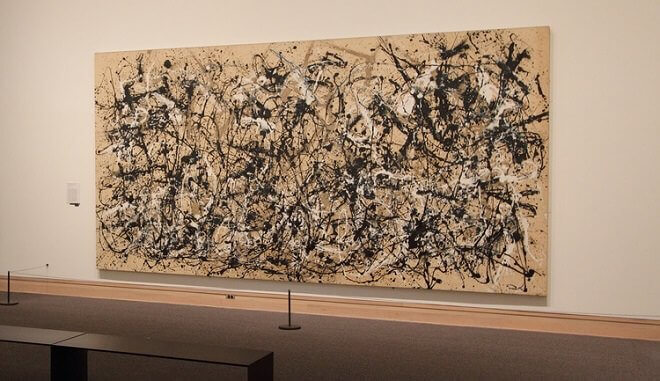
If there is one thing I have learned from my nineteen years of living, it’s that people are either an Annunciation Triptych or an Autumn Rhythm. And I’d like to say that Robert Campin personally painted me, but there’s currently a cigarette perched between my middle and index fingers that says otherwise. I take a long drag from it and the end of the Marlboro flares an amber hue before I flick the ashes down on the asphalt. It’s my third one tonight—seventh cigarette overall today—but the exquisite delight I received from the first one this morning still has not heightened in the slightest. Truly a shame. I relieve my throat from the cloud of smoke that has been billowing there and I allow the sweet embrace of the nicotine to wreak its havoc upon my consciousness. The paper of the cigarette smolders closer and closer towards the butt end of it and smoke wreathes around me like a heady blanket. It becomes a fog I choose to revel in.
I am sitting on the roof, my feet are swinging four stories above the street, lightly kicking against the edifice of the building. There is no garden up here. Helen could never be bothered with a chore, which could otherwise distract her from the daunting task of performing as my father’s housewife. She is definitely an Annunciation Triptych because she knows what she wants, but her hues are too technicolored and her form too fake to be lauded in a museum. So, there is only asphalt up here and the light breeze coming from the East River. On the wind, the sounds of the city life below greet me like a plastic cup being shoved ceremoniously into my hand after walking into a house party: the excited murmurs from people who must be tourists, the constant honks of taxi cabs, the pattering of shoes on concrete. Past the McCarson’s brownstone across the street, I can make out the very top of the Triborough Bridge and the moon perches itself just right behind it.
Flicking the ashes off the cigarette, I bring it to my lips—the butt is stained with Garnet Flame, the intricate stains of my lips imprinted by the violent shade of red. I relish that final bitter taste, which is relinquished by the woodsy flavor before tossing it to the street below. I do not respect my stepmother, but I would rather not deal with my father’s anger if Helen found my cigarette butts up here. I may come up here often enough to burn my sorrows by cigarettes, but this height is still intimidating, so I always have to scoot back a little from the edge before standing up. The autumn air causes me to wrap my cardigan tighter around my frame. It’s November in New York City, and soon enough, the nights will begin to herald in the bitter cold of winter. Walking towards the door leading inside, I hear from the street, “I hope you have more if you’re hoping to go out tonight!”
Adrianne Weisierski. I go where I had just been and peer out onto the street to find her standing at my front steps with the discarded Marlboro in her fingers. The street lamps illuminate her mahogany eyes as she raises one eyebrow questioningly. As if I could challenge her. Her full lips smirk themselves into a grin as she runs a hand through her ebony curtain of hair. She studies film production at NYU and works behind the concessions counter at the 55th Street Playhouse. Adrianne wants to make films that explore the ‘current American condition’—whatever that means. We met when we were seventeen—in one of the bathrooms of Stuyvesant High School, she asked me to watch the door while she snorted a line of coke before biology with Mr. Hansen—and have been inseparable ever since. Adrianne Weisierski is definitely an Annunciation Triptych, though she pretends to be an Autumn Rhythm. Noticing the tight-fitting overalls she is wearing over her umber sweater, I realize that perhaps I did not just finish my last cigarette for the night.
“And just what do you have planned?!” I cross my arms over my chest.
“Heathcliff told me that he could get us into Minton’s Playhouse tonight!” Heathcliff—his name is actually Heath, but we do not affiliate with formalities—is a sax player we met at a jazz bar that was not Minton’s Playhouse; the actual name of the place escapes me. After his first show, the three of us took shots of tequila together before he started rolling a blunt.
“Far out! That live music club in Harlem?” I say. We usually go see Heathcliff’s shows at Jimmy Ryan’s, a very prominent jazz club on 54th Street. Despite usually being paired with only his sax, he always outperforms the acts that try emulating Frank Sinatra.
“Exactly that one! So, are you coming or not?”
“Hell yeah! Let me change and I’ll be right down. We’ll need to get another pack before we go, though!”
“Fine by me!”
******
We see the line trailing outside of the establishment before the taxi even drops us off. Rounding the side of the building, people have continued gathering in single-file formation for almost two blocks. The venue is situated on the first floor of the building with its doors opening up on West 118th Street. Jutting out from the stucco building is the navy storefront that announces the entrance to the club: Minton’s Playhouse.
In line, I can already see the odd assemblage that usually congregates at these types of places—closest to the door are the wizened crones who still try to cling to how they behaved when Hoover ‘governed the country’ (they will light the first cigars and give out whiskey kisses), in the back are the dejected adolescents who are sporting awkward plaid patches on their bell bottoms that they must have bought out of some bohemian Gap catalogue (they will be the first to leave when they realize that Billie Holiday won’t be making an appearance tonight), and in between the polar opposites lies my crowd: some of us will wear those saffron eyeglasses with frames shaped like circles while modeling the newest denim jacket and we always, always have a cigarette ready to be lit in our hands (we are the ones who trip on substances in the bathroom). Before we left my house, I changed into a wardrobe fit for the occasion—a cropped black turtleneck, a cream short skirt, and of course, a denim jacket to top it off.
Walking upon the crowd, Adrianne glances at the hippies and says, “Charlotte, I’m going to need a cigarette if we’re going to have to stand through another flower child’s opinion on how artisan coffee is better for the bean.” I snort as I pass her one.
I take a cigarette for myself as well and light up. “It could be worse. The oldies could be telling us how the Beatles don’t know what real music is.” Adrianne snickers as we take our spots in the back of the line. “Did Heathcliff say where we should meet him, by the way?”
“He just said he would meet us outside,” she shrugs. Checking her watch, Adrianne remarks, “It’s 9:37 right now and the show starts at 10, so I’m assuming he’ll find us soon.” She looks up and tries craning her neck over the people in front of us. “I’m too short to see over all these people, can you see if he’s at the door?”
The cherry red platforms I decided to strap on give me the advantage of seeing over the crowd and all the way to the doors that lead inside the venue. I estimate that we are about forty people from the entrance, which causes me to squint as I’m surveying the front, but soon enough, I see him.
He has close cropped hair with the front stylishly gelled up. The smattering of rainbow light emanating from within the jazz club gives his normally-chestnut hair a colorful sheen that is actually unsettling. But his eyes are unmistakable—they have longer lashes than mine and their ice blue glow shimmers even from this far away. Besides the magic he can make with his hands as they strum their way across a guitar, they are the most beautiful quality about him. He told us that he can play four instruments besides whichever one he will be performing with tonight and that he attended Mannes for a semester before dropping out since he decided that he did not want to be taught what he already knew. He speaks matter-of-factly and only sings when he’s had enough to drink. Heath “Heathcliff” Carter is like me; he is an Autumn Rhythm. His musical tendencies smatter themselves into a collision of rhythms that he professes for us on nights like these. He affiliates himself within different styles of music and goes through them as quickly as he goes through a compact of hair gel in a month. Heathcliff does not know what he wants, but God, is his spirit so bright.
“Over there! I see him.” I point towards his direction, so that Adrianne can see. “He’s at the entrance like you said.”
Pushing me out of the line before grabbing my arm, she pulls me with her towards the front. As we shoulder past everyone, glares upon the annoyed flicks of cigarettes are thrown our way. We come upon the entrance, “Well, well, well Heathcliff, it’s been too long. What are you playing for us tonight?”
His eyebrows casually raise as he surveys us with that intelligent smirk of his—cast wholly to one side, lips pursed only a little. “Well, for y’all, I was planning on playing a little bit of Sinatra.” Heathcliff is from Oklahoma. I forget the name of the exact city, but from what he has told us, I don’t think it can really be considered a town, let alone a city. This upcoming March will be his third year living in New York.
“Oh, wow how you woo me.” I roll my eyes at Adrianne’s remark.
“So, you can actually get us in here, tonight?” I ask.
“Of course, that’s not even a question. Come in with me and no one should care enough to confront you.” One of the perks of being friends with a performer is that we can always get in for free and ahead of everyone else. “Just try not to make a scene like last time.” His chuckle escapes his grin.
A month ago, Heathcliff finally invited Adrianne and I to one of his shows down in the Village; it was also the first time he showcased his punk talent in front of an audience. Like here, we were allowed to skip the line and we didn’t have to pay to get in, but according to Heathcliff, we may have taken one too many tequila shots since we may have ‘crashed’ his stage. We were only giving the people what they wanted that night: a live rendition of “I Got You Babe.”
“We’ll certainly try our hardest, but you know we can’t promise anything.” Adrianne winks at him. “Charlotte and I just might do a line off of one of your guitars. You really never know.”
When I enter Minton’s Playhouse, my senses become a little disoriented. Inside, the lights are low and the dark wood tables are plentiful, their black coloring soaking up all of the available light left in the dingy space. The chairs are plush and already pushed in. The walls have portraits of famous jazz musicians: Billie Holiday rests over there above the piano, Miles Davis perches himself between the restroom doors, Frank Sinatra winks from his position over those tables against the wall, and there is Charlie Parker sitting on top of the stage. I smell the musty scent of cigarettes that were put out the night before. The audience is already milling about the entire place, and the waiters move to and fro with drinks and hors d’oeuvres that violently shake on the trays they balance so effortlessly on their hands. I hear no singing, nor am I trying to sway to some slow, intelligible rhythm because it is absent. This din of noise is only present because of the crowd of people.
I love it here.
“I’m the first show tonight,” Heathcliff says. His eyes flare up above his smile as he rubs his hands together. Embracing both of us, he exclaims into our hair, “Thank you so much for being here.” Before letting us go and leaving us, he adds, “Y’all better be the closest ones to the stage!”
“Do you think he’s nervous?” I ask.
Adrianne surveys the setting around us. “I would be if I were him This must feel like a once in a lifetime opportunity for him.” She looks at the stage a bit more. “So, we better be as loud as we possibly can.”
“That’s not going to be a problem for us!” I glance towards the bar. “Shall we get a drink first?”
“You read my mind.”
At the bar, we both order double Manhattans—Adrianne loves her whiskey and I love my cocktails—as I look around the club. While it is not crowded yet, the people waiting outside have begun to filter in with us. There are a few people already shadowing the stage—four of the oldies and three of the hippie Gap kids. So far, it won’t be much of a struggle to get in the front. The bartender gives us our drinks and I thrust Adrianne and I in between the two separate factions to get to the very middle of the scaffold. Adrianne mutters “sorry” and “excuse us” and “sorry” again as we meander through the throng of people. Slowly nudging our way forward through shoulders and over stray feet, I recognize the irritated looks given to us, but when we reach the front, when the stage is only a bristle in front of me, I realize it does not matter. “Cheers,” Adrianne and I clink our glasses together. Looking over everyone else’s angry scowls, I register that a lot of people have come for the show tonight, so much so, that I can no longer make out the entrance. “I had no idea that Heathcliff had this much of a following.” It was no surprise that he had a small following—local performers usually pick up devoted admirers, especially if they are as talented as him.
“Maybe they’re here for the other show.” Adrianne muses.
“Do you know who it is?”
“No idea.”
I almost check my watch for the time, but soon enough, Heathcliff starts walking out on the stage and the dizzying cacophony that was present before climbs in volume. His saxophone is strapped around his body by his favorite purple-and-green-checkered strap and his fingers gently nestle the keys, teasing them for their sound, testing how vibrant their fervor will be tonight for us all. Heathcliff struts towards the microphone and speaks, “How is everyone doing tonight?” I suppose he saves his y’alls for us. Behind him, an electric guitar sits on its stand, silently judging the performer in front of it. Perhaps it is for the next singer.
The familiar reassurance by the audience through their raucous cheers makes him smile. His teeth are fully showing and his gentle laugh croaks throughout the room. He finds us at the front and winks before addressing the entire place again. “I hope you don’t mind if I play a little something for y’all tonight.” There it is. Claps and croons of delight answer him. “I’m counting on the fact that if you guys don’t enjoy the show, at least my only two friends here will.” He pauses for dramatic effect. “Because they have to.” Heathcliff laughs as he glances at us again.
He clears his throat before bringing the mouthpiece of the instrument to his mouth.
Heathcliff has taught me the parts of the sax before, so when his digits splay over the spatula keys, I know that when he presses each one, he’s manipulating the sound that is actually being produced by the reed. He rests the bell against his leg and dances to his own song. Eyes closed, lips pursed in concentration, his throat bobs each time a new note interrupts or comes behind the one that was played before it.
We all sway together, not in unison, but in disjointed pockets, each of us understanding the musicality differently. More people have been let in to see the show since he started playing. His sound is comforting and wraps me in a cocoon that separates myself from everyone else. A wrinkle appears in the crease right above his nose and his eyebrows are furrowed as the intensity of his timbre conquers and eradicates any thought I had before listening to him play. The flawless harmonies each preserve their own kind of agony and the vibrations of the resonance replace harsh realities with the fantasy I need. It is brassy and beautiful. It is the kind of sound that makes me want to stab the canvas at home with all the paints I have ever bought. Smatter here. Douse that color out because it just throws off the entire masterpiece. Splatter there. Carefully construct that line along the edge of it. Splash that tint right there in the white space of it all.
Heathcliff will sing later in the night once his groupies buy him a round at the bar, but for now he stops and the crescendo of quiet becomes deafening. We are at a loss for our usual quips and still struggling to cope with the silence. I am the first to clap. I am glad there are no tears pooling in my eyes, but if I were to cry, at least it would be for art.
Everyone else puts their hands together after I do.
He chuckles. “Thank y’all so much. Thank you!” I cannot tell if his eyes are glinting because of the stage lights that are clearly blinding him, but he brushes a hand against his eye and the watery quality disappears. He pauses, “I’m only allowed to play one more song, and it’s going to be a little different.” As Heathcliff begins to shrug off his saxophone, a stage hand flits from the eaves to take it from him before he grabs the electric guitar behind him. Striking his thumb upon the chords of it, the instrument announces itself to us, “Lately, rock music has become a popular genre for me, so I’d like to show y’all a piece I have been working on.”
I sense the crowd drawing closer to the stage while he inches closer to the microphone. And the delicate quiet, which suffocated us after his first song, is now shattered with erratic chords roughly lashing it away. The rhythm of the chords angrily speeds up, igniting a fervent excitement from us. Instead of swaying and allowing the music to coarse through us, Heathcliff’s unrefined vocals—the lyrics expressing themselves through wailing grunts—inspire us to utilize our mutual agonies and aggressively brandish them upon the storefronts of 5th Avenue. Despite not knowing the composition of this song, we all match our projected pitches to his influential chant. Our bodies pulse to the volatile tempo as we coalesce into one another while wholly separating from each other at the same time. Heathcliff’s bizarre tune becomes our normality—we grant it the power to strike out. It is destructive and intoxicating. I am motivated to attack a canvas with all of the reds and browns and whites and blacks puddled on my easel. There can be no symmetry because there is no order to this abstraction. I want the colors to interrupt each other as they frantically scramble to conquer available territory. I want these sinister shades to pull me into their dangerous games.
“HEATHCLIFF! HEATHCLIFF! HEATHCLIFF!” Adrianne begins the chant and it’s soon taken up by the entire audience. I didn’t register the moment Heathcliff stopped singing and they began cheering because I am stunned. That was not just art. It was too exhilarating. That was an experience.
He looks down at us and mouths, “Thank you.” He stands there for a minute or two more and thanks the crowd three more times before retreating backstage.
“Will you go to the bathroom with me?” Adrianne interrupts the awe of my night.
I take a moment, “Sure, but when we come back, let’s get some food,” I reply.
The bathroom is across the entire place and we are in the middle of everyone, so as we struggle through the masses, constant apologies are made on my part to these strangers. Like me, everyone’s face is still lost in admiration for what just happened. It was an experience that can have no real words to describe the actual beauty of it, but I will try to express it for the rest of my life most likely. Or just ask Heathcliff what his intentions were.
I register that we are in the bathroom when the door slams shut behind me. I realize I was lost in thought the whole journey there.
“Okay, you ready?” Adrianne starts.
“For what?”
From the front pocket of her overalls, she brings out two neatly-cut, tightly sealed squares of aluminum. Oh. “We’re about to fucking trip. Imagine listening to Heathcliff sing while rolling on this.” Before I can reply, she starts unwrapping the foiled drugs. I see distorted smiley faces looking up at us—their yellow complexion starkly contrasting against the silver of their packaging.
I look back up at her, “Cute.”
Wrinkling her nose, Adrianne says, “I made sure they were double dipped, too.” Holding her tongue out while scraping the tab out from the aluminum with her right index finger, she delicately positions the drug under her tongue. This kind of reminds me of that one kid from fifth grade who always held their tongue out to see how fast it would dry. Tony? Robert? I do not know and I drop the idea of him with a shrug because he’s not here now. “Thank God, there’s no coppery taste this time. You ready for yours?” She unfolds my square.
I dip my finger and slide the tab onto it. I close my eyes and with my tongue out, I hurriedly place the smiley face under it—inadvertently suffocating its dazed smirk. Opening my eyes, I can see myself in the mirror.
The whites of my eyes flash all over the place. My splattered skin looks rough in the harsh fluorescence of this bathroom lighting. Are my cheeks sallow because of this drug or the cigarettes I smoke? Is the tab on my lips or is it just a shine in the mirror? I rub the glass, but still cannot tell. But for a second, I think I see black rings embedded in my gums and almost recoil in horror. I blink again and they’re gone. My hair, usually hanging close to my neck and right there above my shoulders, distresses itself in stringy champagne strands. There is an ethereal heat that is enveloping my skin; a light sanguine shadow blushes across my face, which further erases my former fair-skinned complexion. My fingers are tingling, my body is buzzing, my sense of shape begins to blur in the mirror when I look down at myself. Robert Campin never got the chance to paint me because Jackson Pollock already did. I look up at my reflection one more time, “Damn, I still need a cigarette.”
Adrianne pulls out her lighter and my pack. “Do you think they would care if we just go ahead and smoke right here?”
Adrianne and her rhetorical questions. I take a cigarette from the pack in her outstretched hand. Clicking the lighter, I breathe in from it.
This is why I am an Autumn Rhythm.
Because I can never say no.
 This Is Adam's World